LEARN ABOUT THE FORMA DIFFERENCE

949•999•0777

230 E 17th St., Ste 202

Costa Mesa, CA 92627

December 2nd, 2011 | By: Dr. Carvalho | Categorized Under: FORMA Announcements, Marathon Training

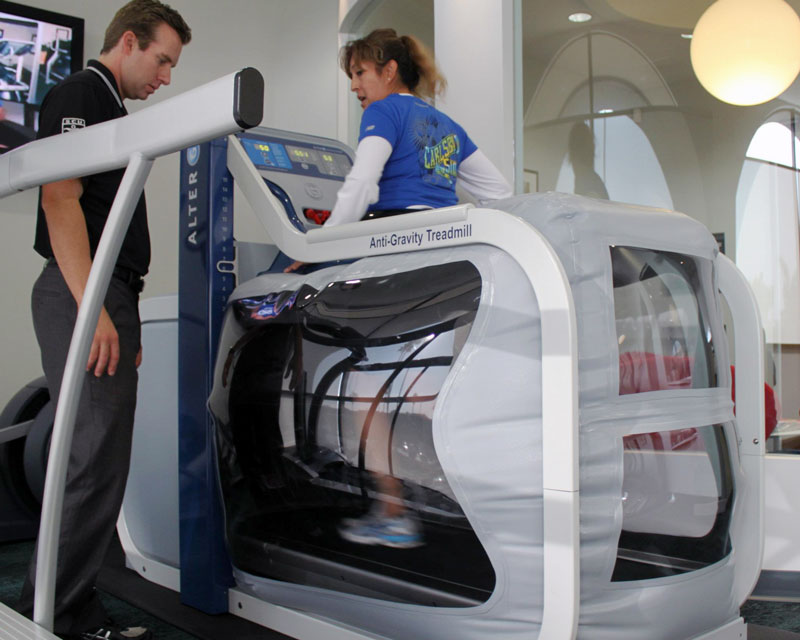
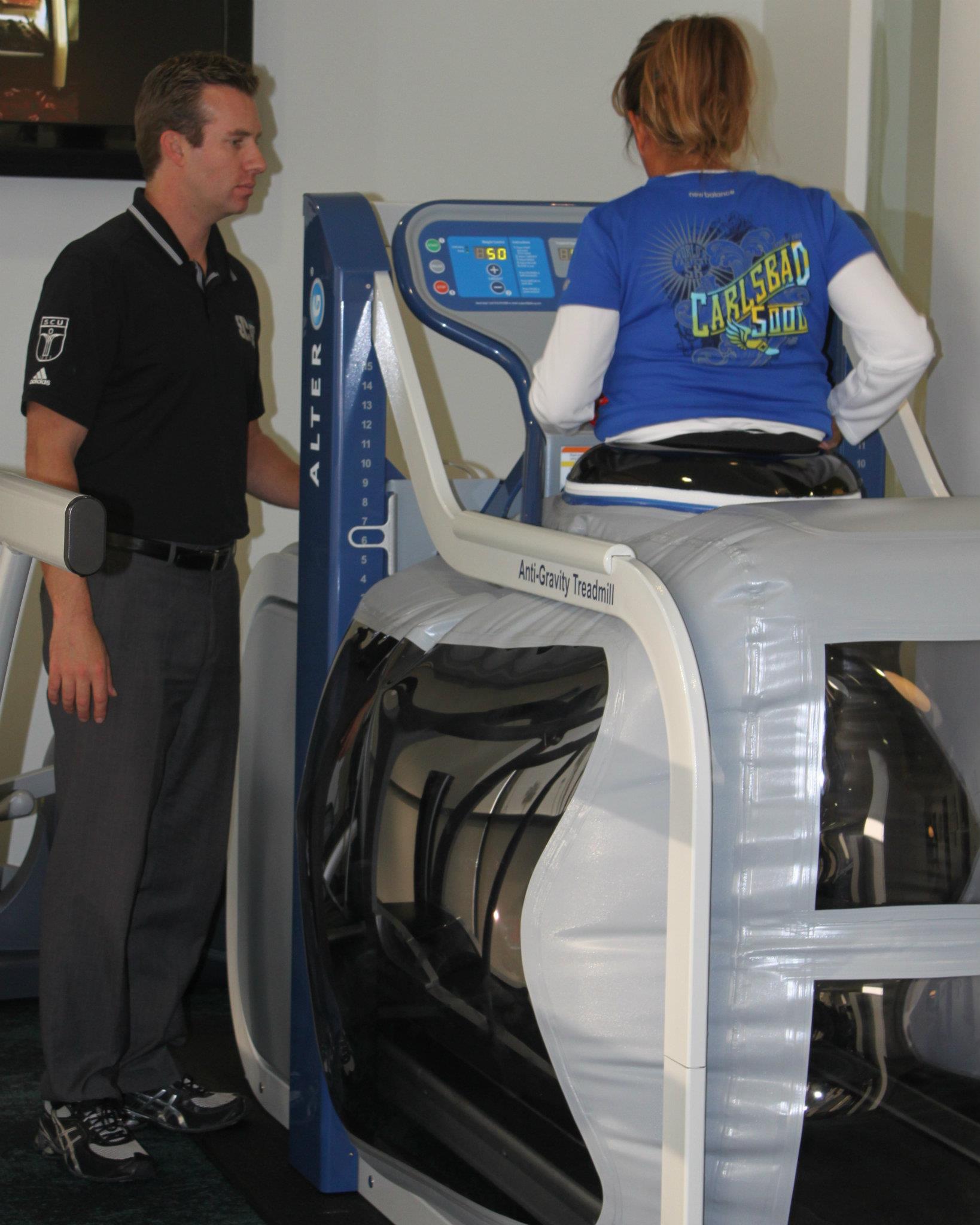
Get ready for access to the most cutting edge run training and injury rehab technology the Anti-Gravity Treadmill.  FORMA now offers what until now only a small group of world class runners secretly practice – NASA technology that defies gravity.
The Alter G-Trainer offers personalized precision un-weighting benefits that build run specific endurance without the pain and risk associated with full-weight impact on joints, bones, tendons, and muscles. With a simple touch of a button, a runner can reduce bodyweight in 1% increments, all the way up to 80% of bodyweight.

How does it work?

An air sealed cushion around a runner’s midsection uses air pressure to un-weight the runner – imagine a cork being pushed up through a wine bottle.  Meanwhile, the runner enjoys normal run range of motion – minus those pounds that the runner wishes to eliminate.

Who can benefit from running with Alter G technology?

(more…)

May 23rd, 2011 | By: Dr. Carvalho | Categorized Under: Marathon Training, Running

Marathon Taper

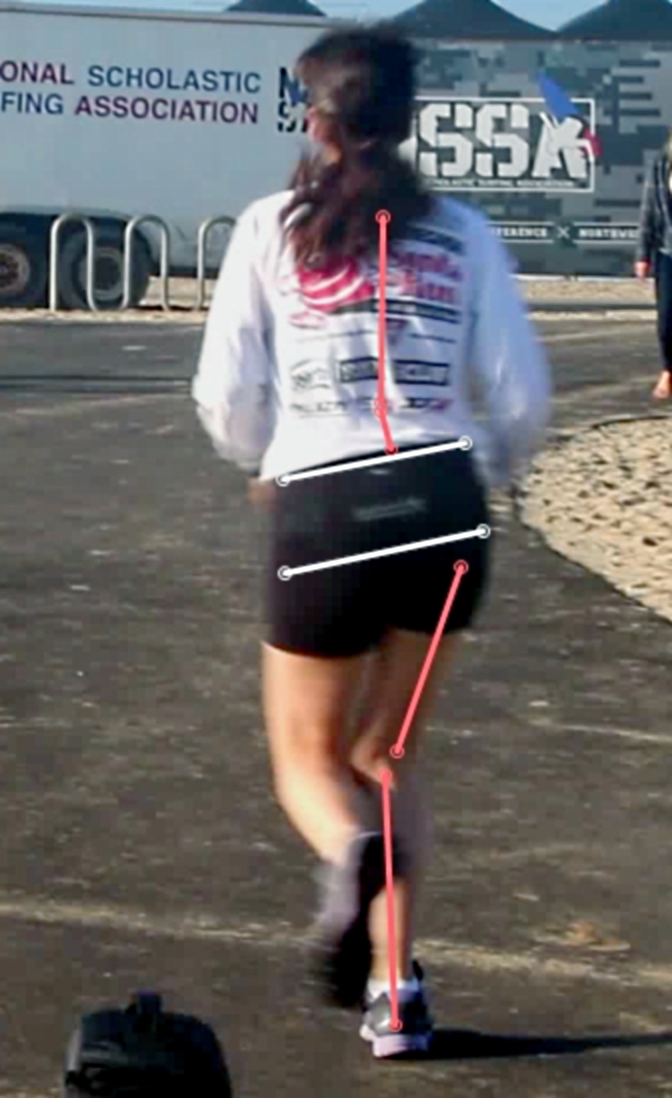
Prior to any competition , the science of exercise and human performance have shown that better performance is achieved if the athlete schedules a well planned tapering of his or hers training intensity and volume (quantity) just prior to competition, and will follow with a psychological and nutritional preparation, in order to aim for their “peak” in performance on the day of the event. On course, every athlete is a different person and all sports will have a distinct tapering strategy. The objective of the tapering is to maximize ones training gains allowing the body to be fully restored and “recharged”, with a focused mind in order to provide the best output, which the body was trained to do. Veteran athletes and those with a well coach-supervised training plan will for sure have their tapering workouts in their planner. (more…)

May 7th, 2011 | By: Dr. Carvalho | Categorized Under: Blog, Dr. Claudio Carvalho, Running

By Claudio Carvalho, DO, edit by Christy Shaver
Most of us can appreciate the idea to increase our potential of longevity we need to maintain good health. But several studies have shown that weakening muscle strength is directly related to the progress of aging and decline in active life style. Potentially increasing our longevity should include maintaining enjoyable quality of life?

Muscle Strength
We all understand that skeletal muscles are made up of thousands of cylindrical muscle fibers that are bounded together by connective tissue and are responsible for the movement of our bodies. It is also the primary responsible for maintaining our respiratory health through the diaphragm, and dictates our body posture throughout the years. With the exception of the muscles in our heart and the smooth muscles in our arteries, veins and digestive organs, the contraction of skeletal muscles is voluntary, controlled by the spinal cord and orchestrated by the brain. Therefore, by diversifying the exercises with our muscles, we are also promoting the health of our nervous system. (more…)

April 10th, 2011 | By: Dr. Carvalho | Categorized Under: Blog, Pain Management, Running

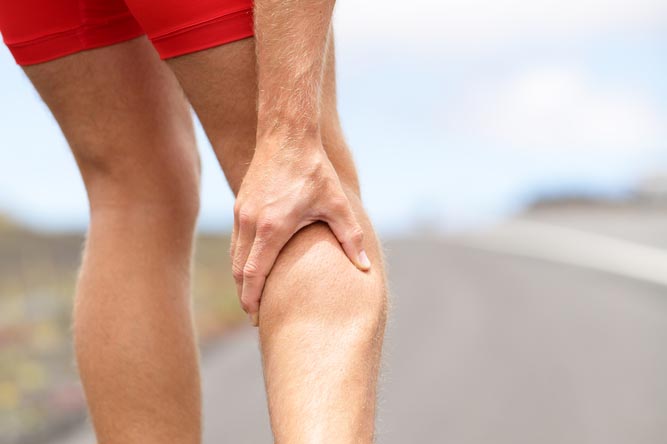
Leg pain

We have all heard the saying, “no pain, no gain.”  But WHAT are we truly gaining from the experiencing of muscle pain?

To begin answering this question, an important concept needs to be understood in that muscles are the “final organ” of the neuromuscular system. To better explain, nerves are connected in a very tight network with all muscles, which depend on the nervous system to properly function to their optimal control and with the desired strength capacity. In addition, cellular organs within the muscles and tendons provide an automatically direct feedback to the nervous system to maximize one’s performance.  Our brain, being the organ where all sensations are interpreted and decisions are made, has the capacity override the neuromuscular control if needed. The brain will facilitate fluid movements if it feels safe and pleasant, and will inhibit or “guard to compensate” movement if there is a threat for injury or if pain is present. (more…)

January 28th, 2011 | By: Team FORMA | Categorized Under: Barefoot Running, Running

Recently, a group of 300 runners participated in the world’s first ever barefoot half-marathon. Organized by the Barefoot Runners of India Foundation (which is located in Mumbai, India), part of the thinking behind the race was to promote barefoot running — something that comes naturally for Indian runners, but not so for fully shoed running enthusiasts here in the United States.

The event in Mumbai was a first for such a large gathering of barefoot runners and already the folks at the Guinness World Records have taken note of its success. But that’s not the subject of today blog post. What we thought we’d do is pose some thoughts about the advantages of running without shoes, and encourage you talk with us here at the FORMA physical therapy office in Costa Mesa before choosing to do so. (more…)

December 9th, 2010 | By: Team FORMA | Categorized Under: Botox, Pain Management

Chances are, if you live and work in Newport Beach, Calif., you know – or you think you know – of at least one person who receives Botox treatments. In fact, according to a recent online poll conducted by The Orange County Register, 1.2 million ‘secret’ Botox treatments are doled out each and every year throughout Southern California. But as you’ll learn in today’s blog entry, Botox isn’t just for appearances!

Botulinum toxin injection therapy — popularly known as Botox — was approved by the Food and Drug Administration (FDA) in April of 2002 as a means of temporarily improving the appearance of frown lines between the eyebrows. The nod from the FDA resulted in widespread cosmetic use of the product, with many advocates seeing it as less intrusive and costly than plastic surgery. (more…)

November 30th, 2010 | By: Team FORMA | Categorized Under: Kelly Young, Meet The Team

Kelly Young - Specialist in Exercise & Sports Nutrition

Meet Kelly Young, a functional exercise specialist who joined FORMA in April of last year. Kelly is an extension of our medical team in executing a comprehensive plan of care for each individual patient. In that way, Kelly epitomizes the FORMA Difference. And part of that difference is the team approach. But enough about us; let’s hear from Kelly:

FORMA: What did you do prior to coming to work for FORMA?

Kelly Young: Prior to FORMA I had been working as a personal trainer, assisting clients in meeting a wide range of nutrition and fitness-related goals. My approach toward personal training is similar to the care we offer patients here at FORMA. Each patient is treated with an individual program to best fit their needs in order to obtain the best outcomes.

(more…)